Home / Articles
How Laser Technology Targets and Closes Problem Veins
Home / Articles
How Laser Technology Targets and Closes Problem Veins
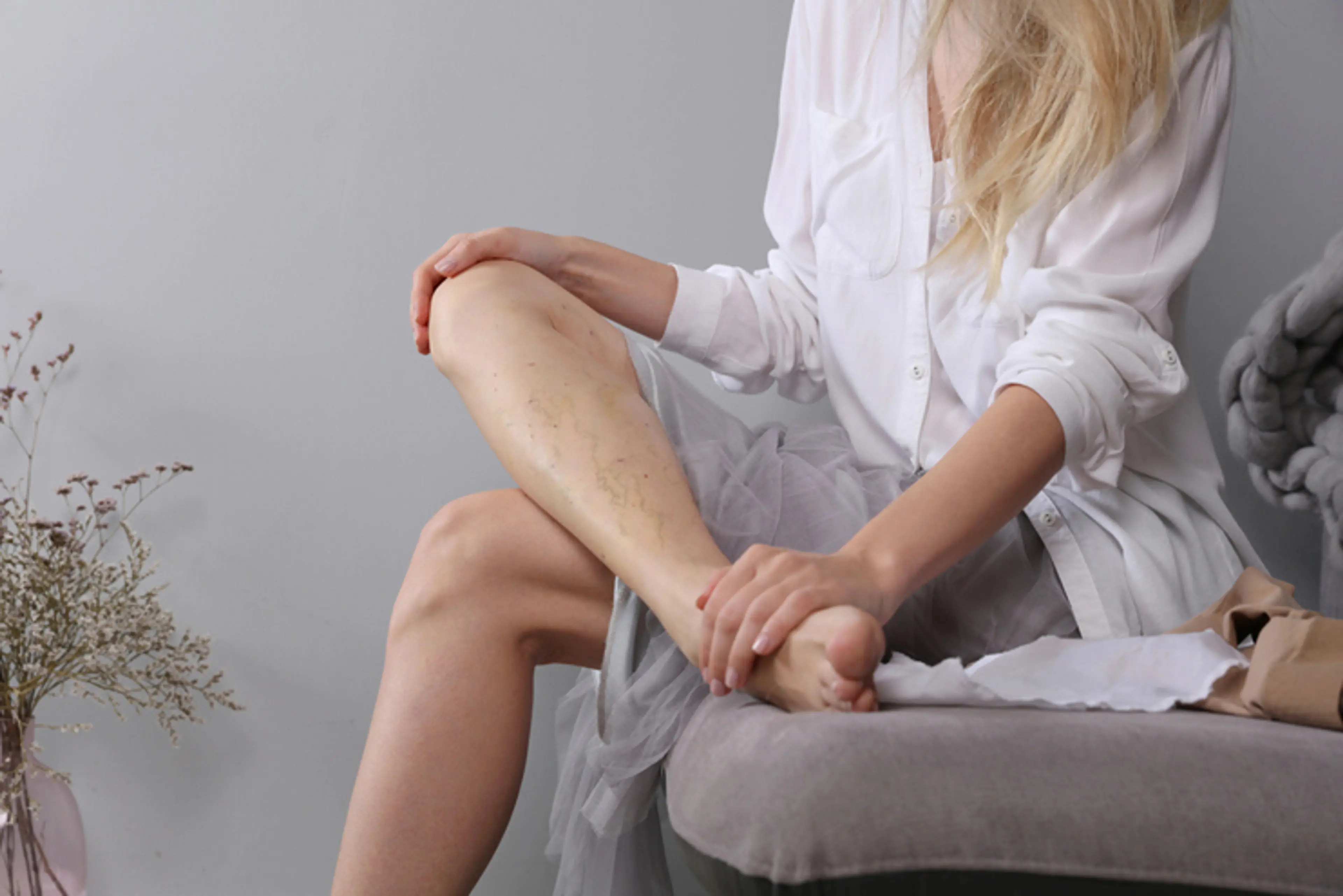
If you’ve ever looked down at your legs and noticed swollen, twisted veins or felt that persistent heaviness that just won’t go away — you’re not alone. Varicose veins and chronic venous insufficiency affect more people than most realize, especially in Korea, where long hours of standing or sitting are part of daily life. But what’s happening under the skin? And how can a beam of light — a laser — resolve something that seems so deeply embedded?
At Charm Vascular Clinic in Seoul, we see this story unfold every day. Patients walk in feeling uncomfortable, self-conscious, and unsure. They walk out with relief — and without major surgery. That’s the power of modern vascular care. And laser technology is right at its center.
Before we talk lasers, let’s get clear on the issue.
Problem veins, particularly varicose veins, occur when valves inside your veins become weak or damaged. In healthy veins, valves act like tiny one-way doors, keeping blood moving back toward the heart. But when these valves fail, blood pools in the vein, increasing pressure and causing the vein to bulge.
Over time, this leads to:
What many people overlook is that this isn’t just cosmetic. It’s a medical issue — a circulation problem that won’t improve with compression stockings alone.
So how does laser technology help?
Once in place, the laser is activated — emitting bursts of energy that heat the vein wall. This heat causes the vein to collapse and seal shut. Over time, the body naturally absorbs the closed vein and reroutes blood through healthy veins nearby.
Think of it like closing a damaged lane on a highway — traffic (blood) is smoothly redirected through better, safer paths.
Let’s take a closer look at the biology.
In experienced hands, like those at Charm Vascular Clinic, the procedure is highly precise, safe, and effective — often taking less than 30 minutes.
To be honest, most patients are surprised at how simple it feels. There’s no general anesthesia, no hospital stay, and no long recovery. You lie comfortably on a procedure bed while Dr. Insoo Park and the team guide the laser fiber with ultrasound imaging. You may feel a bit of pressure, maybe some warmth, but that’s about it.
Afterwards?
You’ll walk out of the clinic the same day, often with just a bandage and compression stocking. Most people return to normal activities within 24–48 hours.
As one of our patients put it, “I thought it would hurt, but it felt like getting a dental cleaning — but on my leg.”
Traditional Vein Stripping | Endovenous Laser Ablation (EVLA) |
|---|---|
Requires general anesthesia | Local anesthesia only |
Long recovery time | Walk-in, walk-out procedure |
More scarring and bruising | Minimal to no visible marks |
Higher recurrence risk | Over 95% long-term success rate when properly done |
Not necessarily — and that’s why evaluation matters.
Personalized treatment is key. What works for one leg might not be ideal for the other — and that’s something only a specialized vascular clinic can accurately assess.
In Korean culture, where proactive health and subtle aesthetic care go hand in hand, treating varicose veins with minimally invasive laser is both a smart medical decision and a confidence-boosting one.
But by the time symptoms like heaviness, night cramps, or skin itching appear, the damage is already progressing.
Laser technology isn’t just a convenience — it’s a revolution in vascular care. For patients with varicose veins or chronic venous insufficiency, it offers a gentle yet powerful solution that restores both comfort and confidence.