Home / Articles
How Ultrasound-Guided Sclerotherapy Improves Precision
Home / Articles
How Ultrasound-Guided Sclerotherapy Improves Precision
To be honest, when most people hear “sclerotherapy,” they imagine a quick injection into a visible vein. And for superficial spider veins, that image is accurate.
But what people often overlook is that many problematic veins—especially the ones causing swelling, aching, and chronic discomfort—are not visible to the naked eye. They’re deeper, branching into complex networks under the skin.
Think of your vein system like an underground network of pipes and tree roots. If you only trim the branch you can see above ground, the roots below can still cause trouble.
That’s exactly what happens when varicose veins are treated without ultrasound guidance. You might fix the visible part, but deeper, refluxing veins—veins where blood is flowing backward—can continue to feed the problem.
Without precision, there’s a higher risk of:
Incomplete vein closure
Persistent symptoms
Missed feeder veins
Higher recurrence rates
Damage to nearby healthy veins
At Charm Vascular Clinic, we’ve seen firsthand how patients who receive UGS often experience faster recovery, fewer complications, and longer-lasting results.
Let’s break down the difference ultrasound makes, step by step:
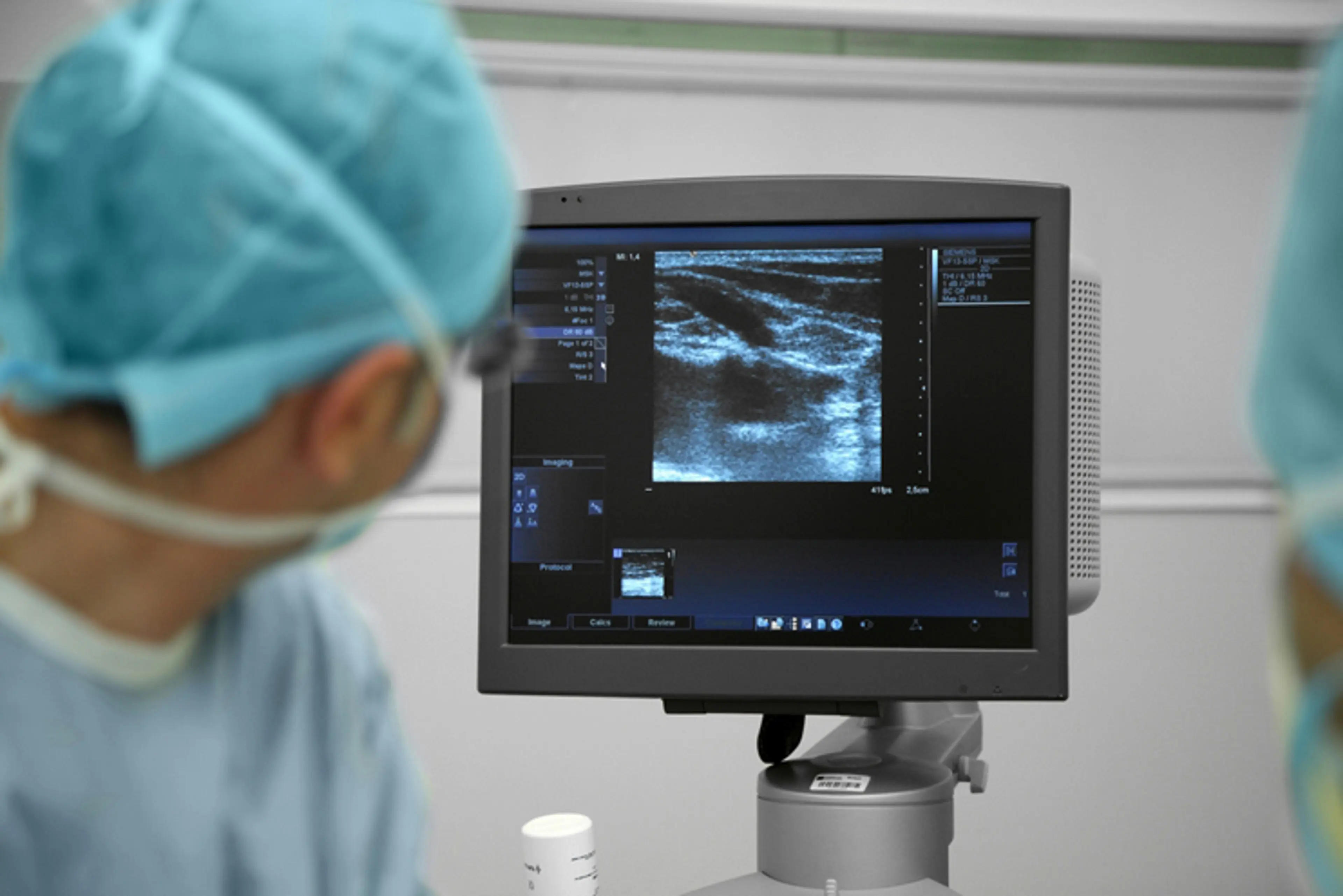
Before we treat anything, we perform a detailed ultrasound scan of your legs. This helps us map every relevant vein—especially the hidden ones. We identify refluxing segments, faulty valves, and the deeper sources feeding visible varicose veins.
Using ultrasound, we guide the needle directly into the problematic vein. It could be deep under the skin, behind a muscle, or too small to feel. With real-time visualization, we reduce the risk of missing the vein or hitting nearby structures.
It’s like performing microsurgery with a live GPS.
When using foam sclerotherapy, the foam is clearly visible on ultrasound. We can see exactly where it travels inside the vein, ensuring it touches the full length of the vein wall and avoids unwanted areas.
This lets us tailor the injection in real time—adjusting pressure, angle, or even patient position to guide the foam into complex tributaries.
Immediately after treatment, we re-scan the area to confirm that the target vein has collapsed and stopped flowing. If any areas are under-treated, we address them on the spot.
That instant feedback loop is something blind injections simply can’t offer.
Several weeks after the procedure, we bring you back for another scan to ensure the vein has remained closed. If needed, additional touch-ups can be done early—before the issue grows again.
This is part of the long-term care mindset that sets clinics like ours apart.
Across the board, clinical studies have confirmed that ultrasound-guided sclerotherapy is safer and more effective than blind injection—especially for treating larger veins, hidden perforators, and recurring varicose networks.
Results show:
Higher rates of complete vein closure
Lower recurrence of varicose veins
Fewer complications
Better outcomes in complex or advanced cases
There are a few truths we’ve come to embrace through thousands of procedures:
These aren’t just textbook points. They’re real insights from the daily practice of minimally invasive vascular care.
The veins are not visible on the skin
You’ve had prior vein surgery or treatments
Your varicose veins are large or complex
You have symptoms of chronic venous insufficiency (like skin changes or swelling)
You’ve experienced recurrence after earlier procedures
In these cases, trying to treat without imaging is like driving with your headlights off.
If you're considering sclerotherapy, ask your clinic:
Will ultrasound be used before and during the procedure?
Is the treating physician experienced in ultrasound-guided techniques?
Do they provide follow-up imaging to confirm success?
Can they show you your vein mapping and explain the treatment plan?
How do they manage large or deep varicose veins?
These questions help you separate general aesthetic clinics from specialized vascular centers.
Here’s how we typically guide patients through treatment:
At the end of the day, precision is what protects your results.
If you’ve been frustrated by recurring veins, unsure about your treatment options, or worried that your condition is getting worse—know this: you're not alone, and there's a more precise path forward.